Technology

Most developers learn TypeScript by adding type annotations to their existing JavaScript. They slap a string here, a number there, and feel like they have leveled up. They have not. They have just made their JavaScript slightly more verbose.
The developers who truly master TypeScript stop thinking about types as labels and start thinking about them as logic. Types that encode business rules. Types that make illegal states unrepresentable. Types that catch entire categories of bugs before a single test runs.
This guide covers the advanced TypeScript patterns that separate developers who use TypeScript from developers who think in TypeScript — updated for the patterns and techniques that matter most heading into 2026.
💡 Who this guide is for: Developers who already know TypeScript basics and want to write code that is genuinely safer, more expressive, and easier to maintain at scale.
TypeScript adoption crossed 80% among professional JavaScript developers in 2025. It is no longer a differentiator to know TypeScript — it is a baseline expectation.
What differentiates senior TypeScript engineers in 2026 is the ability to use the type system as a design tool, not just a documentation layer. The patterns in this guide help you:
Catch entire categories of runtime bugs at compile time
Make APIs self-documenting through expressive types
Enforce business rules in the type system so they cannot be violated
Write generic utilities that work safely across your entire codebase
Collaborate on large teams where type safety is the shared contract
🔑 The mindset shift: Stop asking "what type is this value?" and start asking "what states are possible here, and which ones should be impossible?"
This is the single most powerful pattern in TypeScript and the one most developers underuse. A discriminated union is a type that can be one of several shapes, each identified by a literal discriminant property.
The problem with naive typing:
type ApiResponse = {
  data?: User;
  error?: string;
  loading?: boolean;
};
This type allows combinations that should never exist in reality — a response that has both data and an error, or neither data nor an error, or is simultaneously loading and completed. The type system permits nonsense.
Discriminated union — only valid states are possible:
type ApiResponse =
  | { status: "loading" }
  | { status: "success"; data: User }
  | { status: "error"; error: string };
Now TypeScript enforces correctness. You cannot access data without narrowing to the success state. You cannot have both data and error simultaneously. The type system encodes your business logic.
Using it with exhaustive checking:
function renderResponse(response: ApiResponse) {
  switch (response.status) {
    case "loading":
      return renderSpinner();
    case "success":
      return renderUser(response.data);
    case "error":
      return renderError(response.error);
    default:
      const exhaustiveCheck: never = response;
      throw new Error(`Unhandled state: ${exhaustiveCheck}`);
  }
}
✅ The never trick: Assigning to a variable of type never in the default case means TypeScript will error at compile time if you add a new union member and forget to handle it. Your switch statement becomes self-enforcing.
Real-world use cases:
API response states
Form validation states
Authentication states
Payment flow states
Any state machine with distinct, non-overlapping phases
Template literal types let you create string types that follow specific patterns — validated entirely at compile time with no runtime cost.
Basic template literal type:
type EventName = `on${Capitalize<string>}`;

const validEvent: EventName = "onClick";    // valid
const invalidEvent: EventName = "clicked";  // TypeScript error
Building a type-safe event system:
type UserEvents = "created" | "updated" | "deleted";
type OrderEvents = "placed" | "shipped" | "delivered" | "cancelled";

type EventKey<T extends string, E extends string> = `${T}:${E}`;

type AppEvents =
  | EventKey<"user", UserEvents>
  | EventKey<"order", OrderEvents>;

// Valid
const event1: AppEvents = "user:created";
const event2: AppEvents = "order:shipped";

// TypeScript error — does not match any valid pattern
const event3: AppEvents = "user:shipped";
const event4: AppEvents = "product:created";
Type-safe CSS-in-JS property builder:
type CSSProperty = "margin" | "padding" | "border";
type CSSDirection = "top" | "right" | "bottom" | "left";

type DirectionalCSS = `${CSSProperty}-${CSSDirection}`;

const validProp: DirectionalCSS = "margin-top";    // valid
const invalidProp: DirectionalCSS = "margin-center"; // TypeScript error
Type-safe API route builder:
type HttpMethod = "GET" | "POST" | "PUT" | "DELETE";
type ApiVersion = "v1" | "v2";

type ApiRoute = `/${ApiVersion}/${string}`;
type MethodRoute = `${HttpMethod} ${ApiRoute}`;

const route: MethodRoute = "GET /v1/users";    // valid
const badRoute: MethodRoute = "PATCH /v1/users"; // TypeScript error
💡 Template literal types have zero runtime cost. They exist purely in the type layer and get fully erased at compile time. You get complete compile-time safety with no performance trade-off.
The builder pattern creates complex objects step by step. TypeScript's type system lets you make this pattern enforce required steps and prevent invalid configurations entirely at compile time.
Type-safe query builder:
type QueryState = {
  table: string | undefined;
  conditions: string[];
  limit: number | undefined;
};

class QueryBuilder<T extends QueryState> {
  private state: T;

  constructor(state: T) {
    this.state = state;
  }

  from<Table extends string>(
    table: Table
  ): QueryBuilder<T & { table: Table }> {
    return new QueryBuilder({ ...this.state, table });
  }

  where(condition: string): QueryBuilder<T & { conditions: string[] }> {
    return new QueryBuilder({
      ...this.state,
      conditions: [...this.state.conditions, condition],
    });
  }

  limit(n: number): QueryBuilder<T & { limit: number }> {
    return new QueryBuilder({ ...this.state, limit: n });
  }

  build(
    this: QueryBuilder<{ table: string; conditions: string[]; limit: number }>
  ): string {
    return `SELECT * FROM ${this.state.table}
            WHERE ${this.state.conditions.join(" AND ")}
            LIMIT ${this.state.limit}`;
  }
}

const query = new QueryBuilder({
  table: undefined,
  conditions: [],
  limit: undefined,
})
  .from("users")
  .where("active = true")
  .limit(10)
  .build(); // valid

// TypeScript error — build() requires table and limit to be set
new QueryBuilder({ table: undefined, conditions: [], limit: undefined })
  .where("active = true")
  .build();
🔑 What makes this powerful: TypeScript tracks which builder methods have been called through the generic parameter T. The build() method only exists as callable when the required steps have been completed. Missing a required step is a compile-time error, not a runtime surprise.
Conditional types let you write types that branch based on other types — essentially if-else logic in the type system.
Basic conditional type:
type IsString<T> = T extends string ? true : false;

type A = IsString<string>;  // true
type B = IsString<number>;  // false
type C = IsString<"hello">; // true
Unwrapping Promise types:
type Awaited<T> = T extends Promise<infer U> ? Awaited<U> : T;

type A = Awaited<Promise<string>>;          // string
type B = Awaited<Promise<Promise<number>>>; // number
type C = Awaited<string>;                   // string
Deeply flattening array types:
type DeepFlatten<T> = T extends Array<infer Item>
  ? DeepFlatten<Item>
  : T;

type A = DeepFlatten<string[][][]>; // string
type B = DeepFlatten<number[]>;     // number
type C = DeepFlatten<string>;       // string
Type-safe function return type extractor:
type ReturnTypeOf<T> = T extends (...args: any[]) => infer R ? R : never;

const fetchUser = async (id: string): Promise<User> => {
  // implementation
};

type FetchUserReturn = ReturnTypeOf<typeof fetchUser>;
// Promise<User>

type ResolvedUserReturn = Awaited<FetchUserReturn>;
// User
Conditional types for API response handling:
type ApiResult<T, E = string> = T extends void
  ? { success: true }
  : { success: true; data: T } | { success: false; error: E };

type VoidResult = ApiResult<void>;
// { success: true }

type UserResult = ApiResult<User>;
// { success: true; data: User } | { success: false; error: string }

type UserResultWithCustomError = ApiResult<User, ApiError>;
// { success: true; data: User } | { success: false; error: ApiError }Mapped types let you create new types by transforming every property of an existing type — adding modifiers, changing value types, filtering properties, or remapping keys.
Making all properties optional or required:
type Partial<T> = { [K in keyof T]?: T[K] };
type Required<T> = { [K in keyof T]-?: T[K] };
type Readonly<T> = { readonly [K in keyof T]: T[K] };
Deep partial — recursively optional:
type DeepPartial<T> = {
  [K in keyof T]?: T[K] extends object ? DeepPartial<T[K]> : T[K];
};

type User = {
  name: string;
  address: {
    street: string;
    city: string;
    country: string;
  };
};

type PartialUser = DeepPartial<User>;
// All nested properties become optional too
Filtering properties by value type:
type PickByValue<T, V> = {
  [K in keyof T as T[K] extends V ? K : never]: T[K];
};

type User = {
  id: number;
  name: string;
  email: string;
  age: number;
  active: boolean;
};

type StringFields = PickByValue<User, string>;
// { name: string; email: string }

type NumberFields = PickByValue<User, number>;
// { id: number; age: number }
Creating getter and setter method types from a model:
type Getters<T> = {
  [K in keyof T as `get${Capitalize<string & K>}`]: () => T[K];
};

type Setters<T> = {
  [K in keyof T as `set${Capitalize<string & K>}`]: (value: T[K]) => void;
};

type UserModel = { name: string; email: string; age: number };

type UserGetters = Getters<UserModel>;
// { getName: () => string; getEmail: () => string; getAge: () => number }

type UserSetters = Setters<UserModel>;
// { setName: (value: string) => void; setEmail: ... setAge: ... }TypeScript's structural type system means two types with the same shape are interchangeable. This can create silent bugs when semantically different values share the same primitive type.
The problem:
function transferFunds(
  fromAccountId: string,
  toAccountId: string,
  amount: number
): void {
  // what stops someone calling this as:
  // transferFunds(toId, fromId, amount) — args silently swapped
}
Branded types — nominal typing in a structural system:
type Brand<T, B extends string> = T & { readonly __brand: B };

type UserId = Brand<string, "UserId">;
type AccountId = Brand<string, "AccountId">;
type USD = Brand<number, "USD">;
type EUR = Brand<number, "EUR">;

function createUserId(id: string): UserId {
  return id as UserId;
}

function createAccountId(id: string): AccountId {
  return id as AccountId;
}

function transferFunds(
  from: AccountId,
  to: AccountId,
  amount: USD
): void {
  // implementation
}

const userId = createUserId("user-123");
const fromAccount = createAccountId("acc-456");
const toAccount = createAccountId("acc-789");
const amount = 100 as USD;
const euroAmount = 100 as EUR;

transferFunds(fromAccount, toAccount, amount); // valid

// TypeScript errors — cannot mix semantically different types
transferFunds(userId, toAccount, amount);
transferFunds(fromAccount, toAccount, euroAmount);
✅ Real-world applications for branded types:
User IDs vs Product IDs vs Order IDs — all strings, never interchangeable
USD vs EUR vs GBP — all numbers, catastrophic if mixed
Sanitized vs unsanitized strings — prevent SQL injection at the type level
Validated vs unvalidated email addresses
Encrypted vs plaintext passwords
The infer keyword lets you extract and name type components from within a conditional type — one of the most powerful and underused features in TypeScript.
Extract function parameter types:
type FirstParam<T> = T extends (first: infer F, ...rest: any[]) => any
  ? F
  : never;

type A = FirstParam<(name: string, age: number) => void>;
// string

type B = FirstParam<(id: number) => Promise<User>>;
// number
Extract Promise resolution type:
type UnwrapPromise<T> = T extends Promise<infer U> ? U : T;

type A = UnwrapPromise<Promise<User[]>>;  // User[]
type B = UnwrapPromise<string>;           // string
Extract array element type:
type ElementOf<T> = T extends Array<infer E> ? E : never;

type A = ElementOf<User[]>;     // User
type B = ElementOf<string[][]>; // string[]
type C = ElementOf<string>;     // never
Extract constructor parameter types:
type ConstructorParams<T> = T extends new (...args: infer P) => any
  ? P
  : never;

class UserService {
  constructor(
    private db: Database,
    private cache: CacheService,
    private logger: Logger
  ) {}
}

type ServiceDeps = ConstructorParams<typeof UserService>;
// [Database, CacheService, Logger]Two of the most practically useful TypeScript features for writing expressive, safe code without losing type inference.
Const assertions — preserve literal types:
const config = {
  endpoint: "https://api.example.com",
  timeout: 5000,
  retries: 3,
} as const;

// config.endpoint is "https://api.example.com" — not just string
// config.timeout is 5000 — not just number
// All properties are readonly

type Endpoint = typeof config.endpoint;
// "https://api.example.com" — the exact literal, not string
Tuple inference with const:
function createRoute<T extends readonly string[]>(
  ...segments: T
): T {
  return segments;
}

const route = createRoute("users", "profile", "settings") as const;
// readonly ["users", "profile", "settings"]
// Not string[] — the exact tuple shape is preserved
The satisfies operator — validate without widening:
type ColorMap = Record<string, [number, number, number] | string>;

// Without satisfies — loses specific type information
const palette: ColorMap = {
  red: [255, 0, 0],
  green: "#00ff00",
};
palette.red;   // [number, number, number] | string — too wide

// With satisfies — validates AND preserves specific types
const palette2 = {
  red: [255, 0, 0],
  green: "#00ff00",
} satisfies ColorMap;

palette2.red;   // [number, number, number] — specific type preserved
palette2.green; // string — specific type preserved
💡 The satisfies operator is the answer to the classic TypeScript dilemma: you want to validate that an object matches a type, but you do not want to lose the specific literal types that inference gives you. satisfies does both simultaneously.
TypeScript allows you to extend existing types from third-party libraries or global interfaces — without modifying library source code.
Extending Express Request type:
declare global {
  namespace Express {
    interface Request {
      user?: AuthenticatedUser;
      requestId: string;
      tenantId: string;
    }
  }
}

// Now available everywhere Express Request is used
app.get("/profile", (req, res) => {
  const user = req.user;      // AuthenticatedUser | undefined
  const id = req.requestId;   // string
  const tenant = req.tenantId; // string
});
Extending environment variable types:
declare global {
  namespace NodeJS {
    interface ProcessEnv {
      DATABASE_URL: string;
      JWT_SECRET: string;
      PORT: string;
      NODE_ENV: "development" | "staging" | "production";
      REDIS_URL?: string;
    }
  }
}

// Now process.env is fully typed
const dbUrl = process.env.DATABASE_URL;  // string — not string | undefined
const env = process.env.NODE_ENV;
// "development" | "staging" | "production"
Extending third-party library types:
import "some-library";

declare module "some-library" {
  interface LibraryOptions {
    customPlugin: CustomPlugin;
    timeout: number;
  }
}Pattern | Primary Use Case | Complexity | Impact |
|---|---|---|---|
Discriminated Unions | State machines, API responses | Low | Very High |
Template Literal Types | String pattern validation | Medium | High |
Builder Pattern Types | Step-enforced object construction | High | High |
Conditional Types | Type transformation logic | High | Very High |
Mapped Types | Type shape transformation | Medium | Very High |
Branded Types | Preventing type confusion | Low | High |
Infer Keyword | Extracting type components | High | High |
Satisfies Operator | Validate without widening | Low | Medium |
Module Augmentation | Extending library types | Medium | High |
Using any — the type system surrender:
// Never do this
function processData(data: any): any {
  return data.whatever.you.want;
}

// Do this instead
function processData<T extends Record<string, unknown>>(data: T): T {
  return data;
}
Type assertions without validation:
// Dangerous — you are lying to the compiler
const user = JSON.parse(response) as User;

// Safe — validate before asserting
function isUser(value: unknown): value is User {
  return (
    typeof value === "object" &&
    value !== null &&
    "id" in value &&
    "name" in value
  );
}

const parsed = JSON.parse(response);
if (isUser(parsed)) {
  const user = parsed; // User — safely narrowed
}
Non-null assertions without justification:
// Risky — you are promising TypeScript something it cannot verify
const element = document.getElementById("app")!;

// Safer — handle the null case explicitly
const element = document.getElementById("app");
if (!element) throw new Error("Required element #app not found in DOM");The strictest TypeScript configuration catches the most bugs. Use this as your baseline:
{
  "compilerOptions": {
    "strict": true,
    "noUncheckedIndexedAccess": true,
    "exactOptionalPropertyTypes": true,
    "noImplicitReturns": true,
    "noFallthroughCasesInSwitch": true,
    "noImplicitOverride": true,
    "allowUnusedLabels": false,
    "allowUnreachableCode": false,
    "useUnknownInCatchVariables": true
  }
}
⚠️ noUncheckedIndexedAccess is the single most impactful flag most codebases are missing. It makes array index access return T | undefined instead of T — forcing you to handle the case where the index is out of bounds. It will surface real bugs on day one.
Advanced TypeScript is not about knowing more syntax. It is about developing the instinct to encode correctness directly into your types — so that entire categories of bugs become impossible to write, not just caught by tests.
The patterns to internalize first:
Discriminated unions for any value that can be in multiple distinct states
Branded types anywhere semantically different values share a primitive type
Mapped and conditional types when you need to transform type shapes programmatically
The satisfies operator whenever you want validation without losing inference
Module augmentation whenever you need to extend third-party types safely
TypeScript is just JavaScript with annotations. TypeScript at its best is a design language that makes your business logic provably correct before it runs. The developers who reach that level write code that is faster to review, safer to refactor, and genuinely more reliable in production.
The type system is not your enemy. It is the most powerful tool in your codebase.
A passionate writer covering technology, design, and culture.
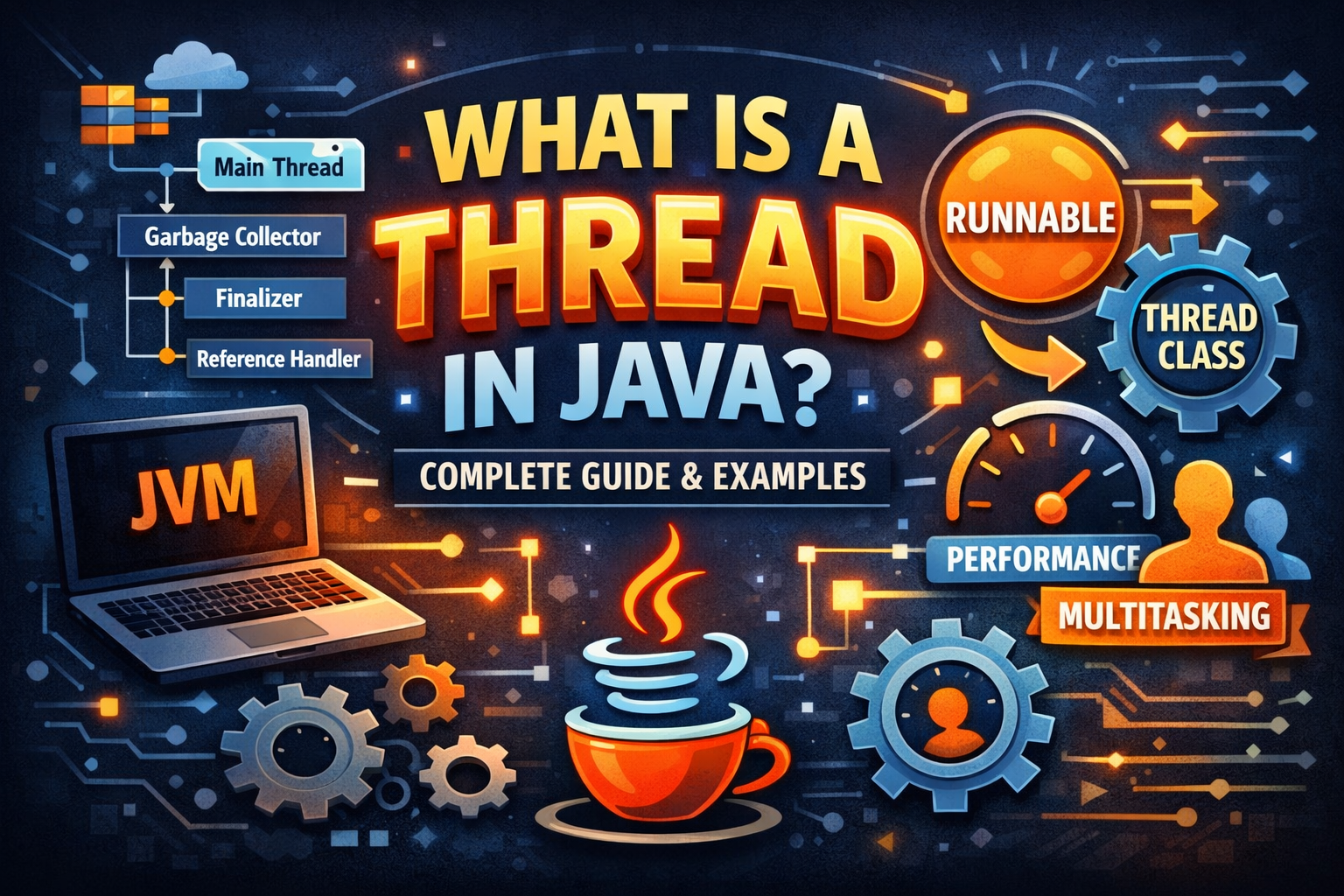
A thread in Java is a lightweight unit of execution that enables concurrent processing within a program. It helps improve performance, responsiveness, and efficient resource utilization. In this guide, we cover thread basics, lifecycle, memory model, and how to create threads using Thread class and Runnable interface with practical examples.

Blue-green, canary, rolling updates, feature flags — every technique explained with real failure stories, rollback strategies, and the database migration patterns that make or break them.

A journey through PostgreSQL internals: the planner, executor, buffer pool, WAL, and MVCC — understanding these makes every query you write more intentional.