Technology

PostgreSQL is one of the most powerful and widely used open-source relational database systems. Known for its reliability, performance, and advanced features, it powers applications ranging from small startups to large enterprise systems.
But when a developer runs a SQL query, what actually happens inside PostgreSQL? Understanding the internal architecture of PostgreSQL helps developers optimize queries, improve performance, and design better database systems.
This article explains how PostgreSQL processes and executes queries step by step.
PostgreSQL follows a client-server architecture.
In this model, applications act as clients that send SQL queries to the PostgreSQL server. The server processes these queries and returns results back to the client.
The architecture mainly consists of two major components:
1. PostgreSQL Server Process
Handles query processing, execution, and data management.
2. Background Processes
Responsible for tasks such as checkpointing, logging, and memory management.
This design ensures PostgreSQL can efficiently handle multiple concurrent connections.
The process begins when a client sends a SQL query to the PostgreSQL server.
Example query:
SELECT name FROM users WHERE id = 10;The server receives this query through a connection established via tools such as:
Application servers
Database clients
APIs
Each client connection is handled by a separate backend process in PostgreSQL.
Once PostgreSQL receives the query, the parser checks the SQL syntax.
During this phase:
SQL syntax is validated
Tables and columns are verified
A parse tree is generated
If the query contains errors, PostgreSQL returns an error before execution begins.
After parsing, the query moves to the query planner, also called the optimizer.
The optimizer determines the most efficient way to execute the query. It analyzes factors such as:
Available indexes
Table size
Data distribution
Join strategies
The planner then generates an execution plan, which outlines how PostgreSQL will retrieve the requested data.
For example, it may decide to:
Use an index scan
Perform a sequential scan
Execute joins using nested loops or hash joins
The execution engine follows the generated plan and retrieves the required data.
During this stage, PostgreSQL interacts with:
Shared memory
Buffer cache
Storage files on disk
If the required data already exists in the buffer cache, PostgreSQL retrieves it quickly from memory instead of disk, improving performance.
PostgreSQL uses several memory areas to improve performance:
Shared Buffers
Caches frequently accessed data pages.
Work Memory (work_mem)
Used for operations such as sorting and hashing.
Maintenance Memory
Used for administrative tasks like indexing and vacuuming.
Efficient memory management allows PostgreSQL to process queries faster and handle larger workloads.
PostgreSQL stores data in files on disk organized into data pages.
Each table and index is stored in separate files within the database cluster directory.
PostgreSQL uses Write-Ahead Logging (WAL) to ensure data durability. Before changes are written to disk, they are recorded in WAL logs to prevent data loss in case of system failure.
Several background processes maintain database stability and performance.
Some important processes include:
Checkpointer
Writes dirty buffers to disk periodically.
WAL Writer
Flushes transaction logs to disk.
Autovacuum
Reclaims storage from deleted rows and prevents table bloat.
These processes run continuously to keep the database optimized.
Understanding PostgreSQL’s internal architecture helps developers:
Write more efficient queries
Design better database schemas
Use indexes effectively
Troubleshoot performance issues
Even small optimizations can significantly improve database performance in large systems.
PostgreSQL’s architecture is carefully designed to process queries efficiently while maintaining data reliability and scalability. From parsing SQL queries to generating optimized execution plans and managing storage, every component works together to deliver high performance.
By understanding how queries actually execute inside PostgreSQL, developers can build more efficient applications and better utilize the capabilities of this powerful database system.
Chef Automate & Senior Cloud/DevOps Engineer with 6+ years in IT infrastructure, system administration, automation, and cloud-native architecture. AWS & Azure certified. I help teams ship faster with Kubernetes, CI/CD pipelines, Infrastructure as Code (Chef, Terraform, Ansible), and production-grade monitoring. Founder of Online Inter College.
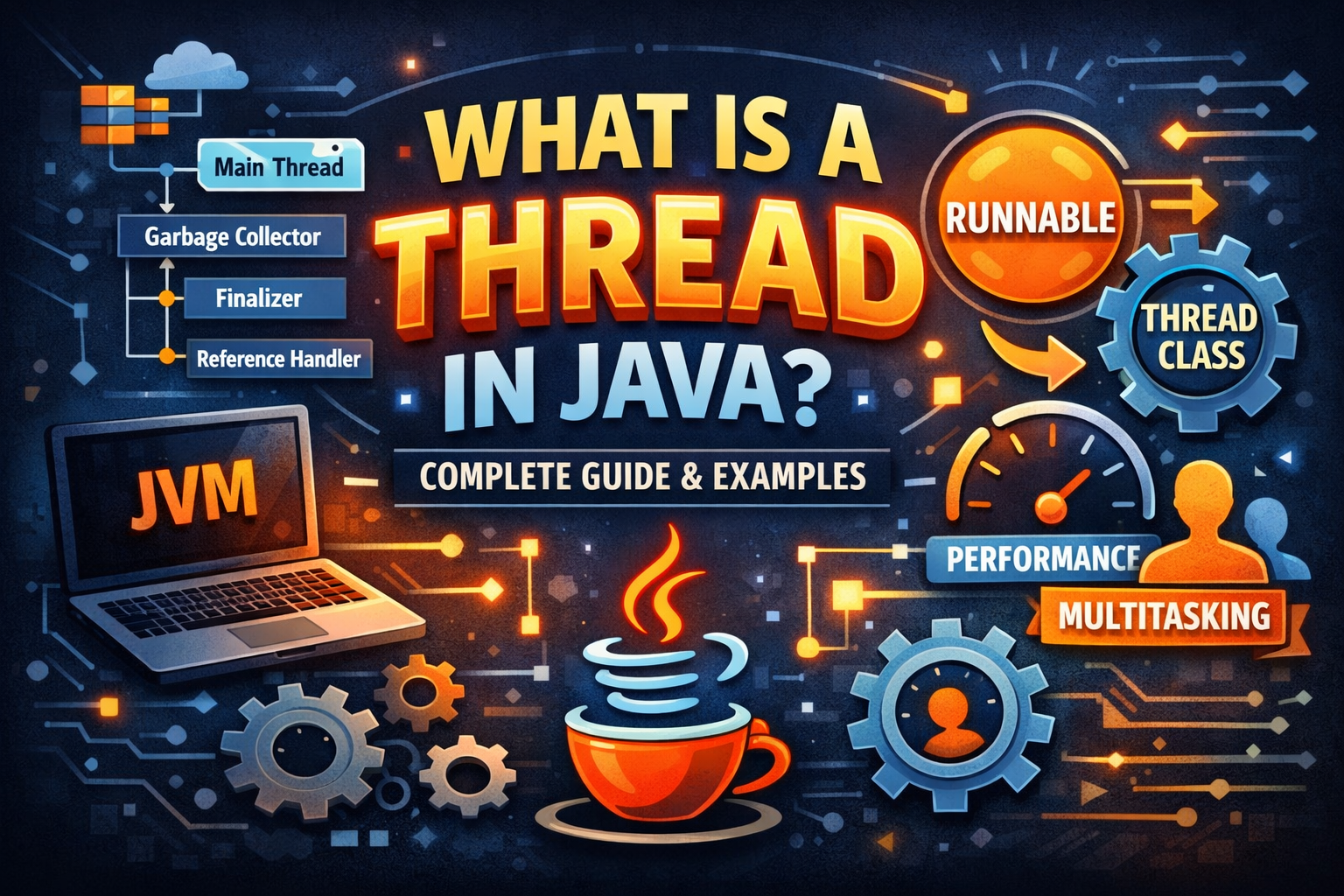
A thread in Java is a lightweight unit of execution that enables concurrent processing within a program. It helps improve performance, responsiveness, and efficient resource utilization. In this guide, we cover thread basics, lifecycle, memory model, and how to create threads using Thread class and Runnable interface with practical examples.
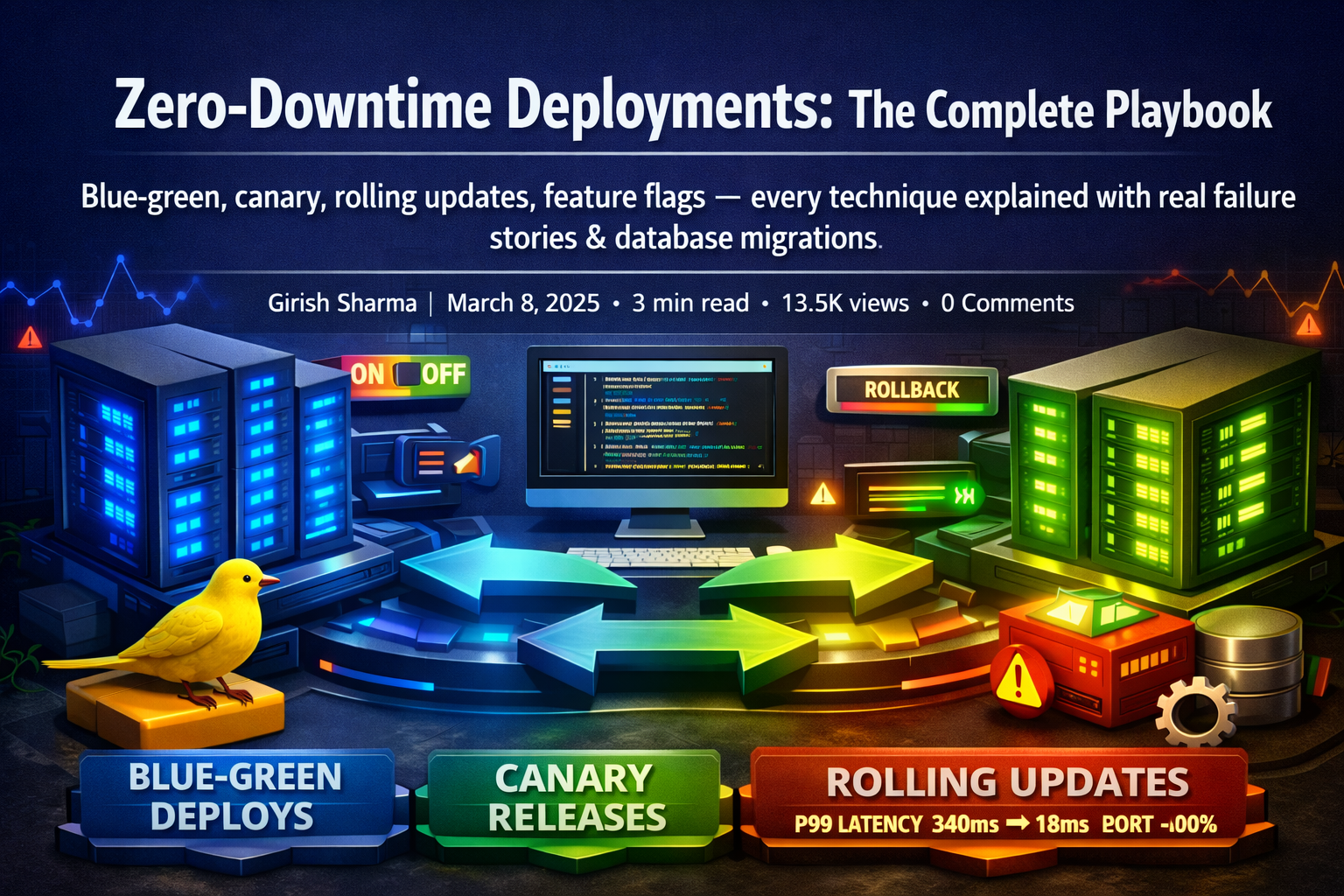
Blue-green, canary, rolling updates, feature flags — every technique explained with real failure stories, rollback strategies, and the database migration patterns that make or break them.

NextAuth v5, protecting routes with Middleware, JWT vs session strategies, and pushing auth logic to the Edge for zero-latency protection — all production-proven patterns.